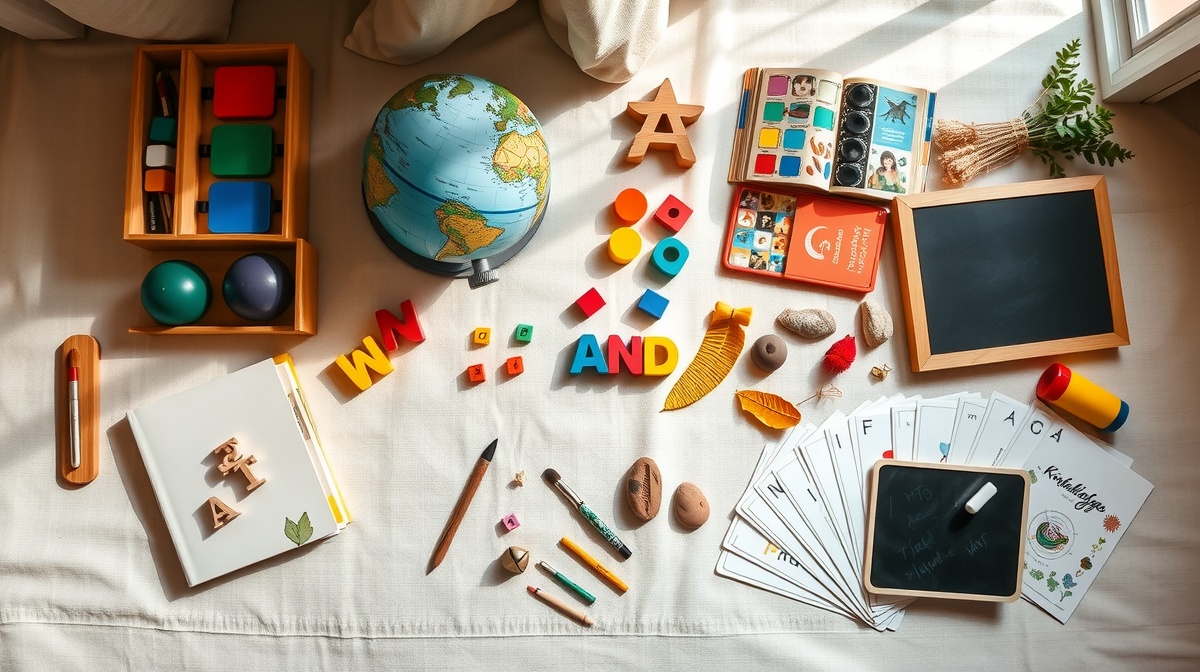
I'll never forget standing in the middle of that massive homeschool convention, completely paralyzed by the wall of kindergarten curricula in front of me. Forty-seven different options. Yes, I counted them twice. My daughter was four, and I had exactly eighteen months to figure out how to not screw up her entire educational future.
The sales rep kept throwing around terms like "phonemic awareness" and "manipulative-based learning," and I just nodded like I knew what she was talking about. Meanwhile, my brain was screaming: What if I pick the wrong one? What if she falls behind? What if I'm the reason she doesn't get into college?
Here's what I wish someone had told me that day: kindergarten curriculum doesn't have to be complicated. In fact, it shouldn't be. After six years of homeschooling three kids through multiple curricula (and plenty of expensive mistakes), I've learned that the best kindergarten education often happens with the simplest approach.
By the end of this guide, you'll know exactly which subjects actually matter for kindergarten, which ones you can skip without guilt, and how to create an amazing learning experience for under $500. No overwhelm, no second-guessing, and definitely no standing in convention aisles having panic attacks.
Why Most Parents Overthink Kindergarten (And Why You Don't Have To)
Let me be brutally honest: kindergarten is about exposure and habit-building, not mastery. Your five-year-old doesn't need to emerge in June reading chapter books or solving multiplication problems. They need to love learning, feel confident trying new things, and develop the foundation skills that'll serve them for years to come.
I learned this the hard way when I spent $400 on a beautiful, comprehensive curriculum that promised to turn my daughter into a tiny scholar. Three weeks in, she was crying over worksheets and I was stressed about "falling behind schedule." The fancy curriculum went into the closet, and we switched to reading stories on the couch and counting cereal pieces at breakfast. Guess what? She learned more in those relaxed moments than in weeks of structured lessons.
The first myth that nearly broke me? You need an expensive boxed curriculum to do kindergarten "right." The truth is, some of the most successful homeschooled kids I know started with library books and sidewalk chalk. The second myth that kept me up at night? Your child must be reading fluently by the end of kindergarten. Actually, reading readiness varies wildly, and pushing too hard too early often backfires.
Here's what kindergarten really needs to accomplish: spark curiosity, build confidence, establish learning routines, and lay groundwork for future academic skills. That's it. The rest is just marketing trying to separate anxious parents from their money.
The 12 Essential Subjects for Kindergarten (And What Each Actually Means)
Don't let this list overwhelm you. Most of these subjects overlap naturally, and you definitely don't need twelve separate curriculum packages. Think of this as your complete roadmap to what kindergarteners actually need to learn.
1. Reading Readiness & Phonics
This is your non-negotiable subject, but it's simpler than the fancy programs make it seem. Reading readiness means letter recognition, understanding that letters make sounds, and connecting those sounds to make words. Your child doesn't need to read Harry Potter by June—they need to be excited about books and confident with basic phonics.
I've tried everything from $200 phonics programs to free apps, and honestly? The expensive ones aren't automatically better. What matters is consistency and keeping it fun. If your child starts dreading reading time, you're pushing too hard.
2. Handwriting & Fine Motor Skills
Before your kindergartener can write essays, they need to hold a pencil correctly and draw recognizable letters. This subject is really about building the tiny muscles in their hands and developing muscle memory for letter formation.
Don't overthink this one. Basic tracing workbooks from the dollar store work just as well as fancy handwriting curricula. The key is regular practice, not perfect materials.
3. Math Concepts & Number Sense
Kindergarten math is about understanding what numbers mean, not memorizing math facts. Your child should recognize numbers 1-20, understand that "5" represents five actual things, and grasp basic concepts like more/less, bigger/smaller, and simple patterns.
Here's my unpopular opinion: board games teach kindergarten math better than most workbooks. Candy Land covers counting and number recognition. Chutes and Ladders teaches number sequence. Connect Four introduces strategy and patterns. Plus, your kid will actually want to play.
4. Science & Nature Exploration
Forget the expensive experiment kits. Kindergarten science is about noticing the world around them and asking questions. Why do leaves change colors? What happens when ice melts? How do birds fly? Your job isn't to have all the answers—it's to encourage the questions.
Some of our best science lessons happened during nature walks, where my kids collected leaves, watched bugs, and wondered about everything they saw. Free, educational, and infinitely more engaging than worksheets about the scientific method.
5. Social Studies & Community Awareness
This fancy-sounding subject is really just helping your child understand their place in the world. Who's in their family? What do community helpers do? What state do they live in? What are the seasons?
Skip the textbooks. Take field trips to the fire station, post office, and library. Talk about your family traditions. Point out your state on a map. Social studies at this age should be concrete and connected to their actual life.
6. Art & Creative Expression
Art isn't just about creating pretty pictures—it develops fine motor skills, teaches following directions, and gives kids an outlet for emotions they can't yet put into words.
You don't need Pinterest-perfect craft projects. Crayons, construction paper, and glue sticks will cover 90% of kindergarten art needs. The goal is exploration and fun, not museum-worthy masterpieces.

7. Music & Rhythm
Music supports language development, memory, and pure joy. Kindergarteners should sing songs, clap rhythms, and maybe experiment with simple instruments.
Your voice and YouTube can handle most of this. Sing nursery rhymes in the car. Clap along to music. Make instruments from empty containers. Formal music lessons can wait.
8. Physical Education & Gross Motor Skills
Your kindergartener needs to run, jump, climb, and move their whole body every single day. This isn't just about staying healthy—gross motor development actually supports fine motor skills and academic learning.
Free play in the backyard absolutely counts as PE. So does dancing in the living room, riding bikes, and playing tag. Don't overcomplicate this one.
9. Language Arts Beyond Reading
While phonics teaches decoding, language arts builds vocabulary, listening skills, and communication. This happens through conversations, storytelling, and listening to books read aloud.
The secret ingredient? Talk to your child. All the time. Explain what you're doing while cooking. Ask about their drawings. Tell stories about your own childhood. Rich conversation beats any language arts workbook.
10. Character Development & Life Skills
Teaching kindness, manners, responsibility, and emotional regulation matters more than any academic subject. These skills determine whether your child becomes someone others want to be around.
This happens throughout the day, not during designated "character time." Practice saying please and thank you. Talk about feelings when emotions run high. Let them help with age-appropriate chores. Model the behavior you want to see.
11. Bible/Values & Spiritual Development
If faith matters to your family, kindergarten is a perfect time to share simple stories and begin spiritual conversations. If it doesn't, skip this section entirely—that's perfectly fine too.
Keep it simple and age-appropriate. Focus on big concepts like love, forgiveness, and helping others rather than complex theology.
12. Social-Emotional Learning
This increasingly important subject teaches kids to recognize emotions, manage frustration, solve problems with friends, and bounce back from disappointment.
You can't really teach this from a book. It happens when your child gets frustrated with a puzzle and you help them work through it. When they have a conflict with a sibling and you guide them toward resolution. When they're scared of something new and you support them through it.
What Curriculum Do I Need for Homeschool Kindergarten?
Here's the direct answer: you don't need one single "kindergarten curriculum." You need a solid reading program, a basic math program, and everything else can be supplemental or completely free.
I know that's not the answer most new homeschoolers want to hear. We want someone to hand us a box labeled "Everything Your Kindergartener Needs" and trust that we won't mess it up. But here's the reality—kindergarten is actually the easiest time to piece together your own approach, and you'll save hundreds of dollars doing it.
Budget-Friendly Option: The $150-250 Route
This is where I'd start, especially if you're nervous about homeschooling or working with a tight budget.
For reading, choose either "Teach Your Child to Read in 100 Lessons" ($15-20) or stick with free phonics apps like Khan Academy Kids or ABC Reading Eggs. Both work. The book gives you more structure; the apps provide more variety. Pick based on your child's learning style and your comfort level.
For math, Math Mammoth Light Blue series ($30-40) covers everything a kindergartener needs without overwhelming extras. If you want completely free, Khan Academy Kids has excellent math content for this age.
Everything else—science, social studies, art, music—can come from library books, YouTube videos, nature walks, and your own creativity. I know families who've used this approach and raised incredibly well-educated kids.
Why this works: kindergarten doesn't require complexity. Your child needs strong foundational skills in reading and math, plus lots of exposure to everything else. You can provide that exposure without spending a fortune.
Mid-Range Option: The $300-400 Route
If you want more structure and don't mind spending a bit more, consider an all-in-one curriculum like Sonlight K or Veritas Press. These typically cost $200-300 for the core subjects, then you'll add another $50-100 for workbooks and supplies.
The advantage here is convenience. Someone else has planned your year, chosen your books, and provided detailed instructions. If decision fatigue is your enemy, this might be worth the extra cost.
The downside? You're paying for planning and pretty packaging. The actual educational content isn't necessarily better than the budget option.
Premium Option: The $400-600 Route
Curricula like Oak Meadow or Enki offer beautiful, holistic approaches with gorgeous materials and detailed parent guides. They typically run $300-400, plus supplements and materials.
These programs often incorporate multiple learning styles, emphasize creativity, and provide extensive parent support. If you love beautiful books and comprehensive planning, and the budget fits comfortably, they can be wonderful.
But let's be honest—they're not necessary. Your child won't learn more because the workbook has prettier illustrations.
My Personal Recommendation for New Homeschoolers
Start simple. Choose one good reading program and one basic math program. Use free resources for everything else. See how your child learns and what your family needs.
You can always upgrade next year, but you can't get back money spent on unused curricula gathering dust in your closet. I have three friends who bought expensive kindergarten programs and switched to simpler approaches within two months. Don't be them.

How Do I Start Homeschooling My 5 Year Old?
This question keeps new homeschoolers up at night, but I promise it's simpler than you think. The key is starting slowly and building momentum rather than trying to replicate a traditional classroom from day one.
Step 1: Assess Your Child's Readiness & Learning Style (Week 1)
Before you buy anything or plan anything, spend a week just watching your child. Are they ready for structured learning, or do they still need more free play time? Some five-year-olds crave workbooks; others aren't developmentally ready for formal academics.
My middle son showed zero interest in letters at five but was building complex Lego structures and listening to chapter books. My daughter begged for worksheets at four. Same family, completely different readiness levels. Both approaches were right for them.
Notice how your child learns best. Do they like hands-on activities? Do they prefer listening to stories or looking at pictures? Are they wiggly learners who need movement breaks? This week of observation will save you months of fighting the wrong approach.
Step 2: Choose Your Core Programs (Week 2-3)
Based on what you observed, pick your reading and math programs. Just those two. Don't buy science curriculum, don't order art supplies, don't plan a full year of social studies. Start with the basics.
If your child seems ready for structure, lean toward more formal programs. If they're still very play-based, choose gentler approaches. Trust your instincts over marketing materials.
Stick to your budget during this step. I've seen too many families blow their entire year's budget in the first month, then stress about money every time they want to add something fun.
Step 3: Gather Your Materials (Week 3-4)
You need less than you think. Your chosen reading program, math program, pencils, paper, and a library card will handle 80% of kindergarten. Everything else can be added as needed.
Before buying anything new, check Facebook Marketplace and local homeschool buy/sell groups. I've saved hundreds buying gently used curriculum from families who switched approaches or aged out of materials.
Step 4: Create a Simple Routine (Week 4-5)
Kindergarten should be 2-3 hours total per day, including breaks and transitions. More than that and you're pushing too hard.
Here's a sample schedule that works for many families:
- 30 minutes reading instruction
- 30 minutes math
- 30 minutes for science, art, or music (rotating)
- The rest is play, conversation, and life learning
Remember, routines take 4-6 weeks to become natural. Expect some resistance and adjustment time. That's completely normal.
Step 5: Start Small & Adjust (Ongoing)
Your first month is really about establishing the habit of learning together, not covering specific material. If something isn't working, change it. If your child loves something, do more of it.
I switched math programs three times during our first year of homeschooling. I felt like a failure at the time, but now I realize I was just figuring out what worked for our family. That's not failure—that's good parenting.
The biggest mistake new homeschoolers make is thinking they have to stick with their original plan no matter what. You don't. Flexibility is one of homeschooling's greatest advantages.
Making It Work: Your Kindergarten Success Plan
After six years and three kids, I've learned that successful kindergarten homeschooling comes down to three things: realistic expectations, consistent routines, and the flexibility to adjust when something isn't working.
Your kindergartener doesn't need to master every subject or complete every worksheet. They need to develop a love of learning, build confidence in their abilities, and establish the foundation skills that'll serve them throughout their education.
Start with a simple reading program and basic math. Add everything else gradually as you figure out what your child enjoys and what your family can sustain. Remember, you can always do more, but it's harder to dial back from overwhelming yourself and your child.
Most importantly, trust yourself. You know your child better than any curriculum publisher. You care about their success more than anyone else. That makes you perfectly qualified to guide their kindergarten year, even if you don't have all the answers yet.
The beautiful truth about homeschooling kindergarten? Your love, attention, and willingness to learn alongside your child matter infinitely more than having the "perfect" curriculum. Start where you are, use what you have, and adjust as you go. Your kindergartener is going to thrive.