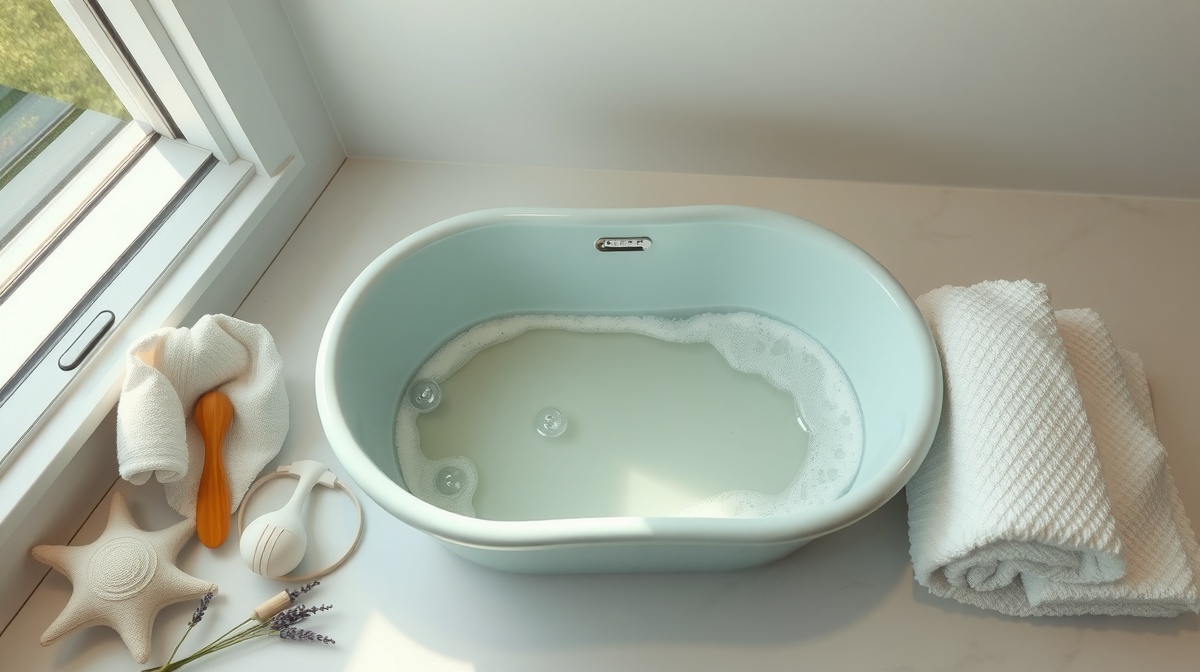
I still remember the first time I gave my daughter a bath at home after leaving the hospital. My husband was at work, my mother had gone home, and there I was—completely alone with this tiny, slippery human who seemed to shrink even smaller when wet. I'd watched the nurse do it twice, but suddenly I couldn't remember a single thing she'd taught me. My hands were shaking, the baby was crying, and I was convinced I was the worst mom in the world.
If you're reading this with that same knot in your stomach, I get it. That terror you feel about bath time? It's completely normal. Your baby feels impossibly fragile, water makes everything slippery, and there's this voice in your head screaming "what if I drop her?"
Here's what I wish someone had told me: newborn bath time doesn't have to be this stressful, anxiety-inducing ordeal. With the right approach, it can actually become one of your favorite bonding moments. I've now bathed three kids through their newborn phase, and I've talked to dozens of other parents about what actually works versus what just sounds good in parenting books.
The difference between bath time panic and bath time confidence comes down to seven specific strategies. These aren't Pinterest-perfect tips—they're real, practical solutions that work when you're exhausted, anxious, and just trying to keep your baby clean and safe.
1. Master the Pre-Bath Setup: The "Everything Within Arm's Reach" Method
I learned this the hard way when I realized I'd forgotten to grab a diaper and had to hold my wet, crying baby while frantically searching through drawers. The setup is honestly 80% of the battle because once that baby is in the water, you can't leave to grab something you forgot.
What You Actually Need (Not What Pinterest Says)
Forget the elaborate bath setups you see on social media. You need five things: a soft washcloth, gentle baby soap (or just water for the first few weeks), a hooded towel, a fresh diaper, and a clean outfit. That's it.
I kept a small wicker basket in our bathroom with all these essentials. No running around the house, no trying to remember where I put things. The anxiety of "did I forget something important?" completely disappeared once I had my system down.
You don't need a $200 bath kit with seventeen different products. Honestly, for the first month, plain warm water cleans your baby just fine. Their skin is delicate, and less is definitely more.
The Layout That Works
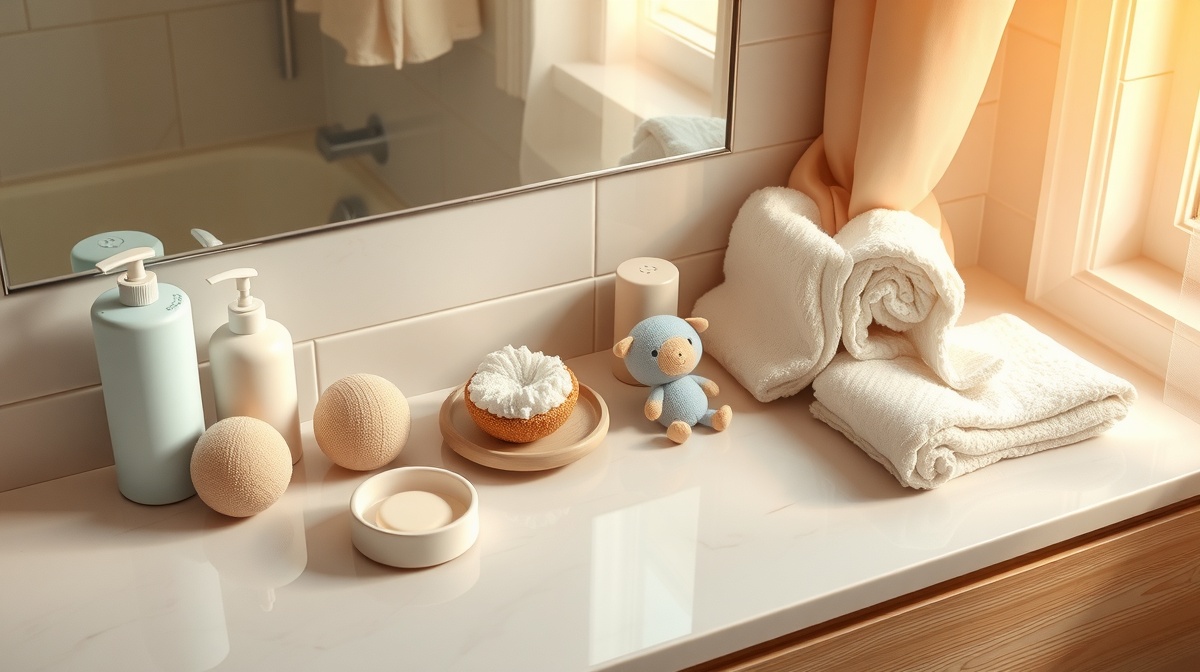
Here's what I wish I'd known from day one: arrange everything at waist height before you even think about undressing the baby. I put the hooded towel on the changing table, supplies on the bathroom counter, and kept that pitcher of warm water nearby for topping off the bath.
This setup prevents that awful moment where you're holding a wet baby in one hand and trying to reach for something with the other. Everything you need should be grabbable without stretching, bending, or taking your attention off your baby.
Trust me on this—prep everything first, then undress the baby. I used to do it the other way around and spent way too many baths feeling frazzled and behind.
2. Get the Temperature Right (And Why It Matters More Than You Think)
What Temperature Should Newborn Bath Water Be?
The sweet spot is 90-100°F (32-37°C). I know that's a range, but here's why it matters: warm enough that your baby doesn't get chilled and start crying, but cool enough to be completely safe for their sensitive skin.
Spend the $10 on a bath thermometer. I resisted this for weeks because it seemed unnecessary, but it was a total game-changer for my anxiety. No more second-guessing myself or doing the elbow test three times. The thermometer removes all doubt, and as a first-time parent, that peace of mind is priceless.
The elbow test works (water should feel warm but not hot on your elbow), but when you're already nervous about bath time, why add another thing to worry about? The thermometer gives you one less decision to make.
How to Maintain Temperature During the Bath
Keep a pitcher of warm water nearby to top off the bath as needed. I learned to test this water with the thermometer too—it's easy to make it too hot when you're focused on keeping the bath warm.
Also, crank up the heat in your bathroom. I aimed for 75-80°F in the room itself. During winter, I used a small space heater (safely positioned away from water, obviously). When the room is warm, your baby stays more comfortable, and honestly, so do you.
Here's something nobody tells you: a 5-10 minute bath is perfect for newborns. You don't need to rush, but you also don't need to make it a 20-minute spa experience. Quick isn't always better, but efficient definitely is.
3. Choose Your Bathing Vessel Wisely: Small Space, Big Comfort
Newborn Tub vs. Sink vs. Large Tub (What Actually Works)
I started with a plastic newborn tub, and it was perfect for building my confidence. The sides are high enough to feel secure, it's sized right for tiny babies, and it's easier on your back than leaning over a big tub. The downside? You'll outgrow it by 3-4 months, but for those early weeks, it's worth it.
At 6 weeks, I switched to bathing in our kitchen sink, and I actually loved it. The height was perfect, warm water was easier to control, and cleanup was simpler. Just make sure your sink is really clean first.
I don't recommend the big bathtub for newborns. There's too much space, everything feels less secure, and you'll spend the whole time worried about your baby slipping around. Save the big tub for when they can sit up on their own.
The Anti-Slip Solution That Changes Everything
Even with the best newborn tub, babies can be slippery when wet. I put a clean washcloth in the bottom of whatever I was using—it provides just enough grip to help you feel more secure.
But honestly? Your hand is the best anti-slip device you have. I always kept one hand supporting my baby's head and neck, and used my other hand for washing. It sounds limiting, but you get surprisingly good at one-handed baby washing.

4. The Gentle Handling Technique: Confidence Comes From Knowing How to Hold Your Baby
The Cradle Hold (The Most Secure Method)
This is the hold that finally made me feel confident. Slide your non-dominant hand under your baby's neck and shoulders, with your thumb and fingers gently supporting their far shoulder. Your forearm supports their back and bottom. Think of it like cradling a football, but with way more support under the head and neck.
This hold gives you complete control and keeps your baby feeling secure. Your dominant hand is free for washing, and if your baby startles or slips, you've got them completely supported.
The Transition From Air to Water (The Scary Part)
Lower your baby feet-first into the water, slowly. I used to count to ten while doing this—it gave me something to focus on besides my anxiety, and the slow pace kept my baby from being shocked by the temperature change.
Most newborns will cry when they first feel the water. This doesn't mean you're doing anything wrong. Temperature changes are startling for babies, even when the water is perfect. I spent weeks thinking my baby hated baths before realizing this was totally normal.
Watch your baby's face and body language. If they relax after the initial surprise, you're golden. If they stay tense and crying, check your water temperature and try talking or singing softly.
The Exit Strategy
Have that hooded towel ready like you're a surgical nurse waiting for a scalpel. I'm not kidding—the quick transition from water to warm, dry towel prevents heat loss and reduces crying.
I learned to wrap my baby immediately while they were still on my arm, then transfer them to the changing table. One smooth motion instead of multiple steps. It sounds dramatic, but it really does make a difference.
5. How Often Should I Bathe My Newborn? (And Why You're Probably Overthinking It)
The Frequency That Actually Makes Sense
For newborns 0-6 weeks old, 2-3 times per week is plenty. I know this might sound gross if you're used to daily showers, but newborns aren't getting dirty the way older kids do. They're not crawling around, they're not eating solid food, and their skin actually benefits from not being washed too frequently.
Daily baths can actually dry out their delicate skin and strip away natural oils they need. I felt guilty about this at first—like I wasn't taking good enough care of my baby—but my pediatrician assured me that less really is more for newborns.
Different families have different preferences, and that's fine. Some cultures do daily baths, some do weekly. Find what works for your family and don't let anyone make you feel bad about it.
Signs Your Baby Needs a Bath (Besides the Schedule)
Forget the calendar and look at your baby. Visible spit-up in the neck rolls? Bath time. Diaper blowout that got everywhere? Definitely bath time. Normal daily life with some milk dribbles? Spot cleaning is fine.
I also learned to pay attention to timing. A calm, fed baby who isn't overstimulated is much more likely to tolerate bath time well. Hungry babies and overtired babies make bath time miserable for everyone.
Spot Cleaning on Off Days
Between actual baths, I did a lot of spot cleaning with a warm, damp washcloth. Face, neck creases, diaper area, hands—this covers all the places that actually get dirty. It takes two minutes and counts as perfectly good baby hygiene.
This was especially helpful during those weeks when I was feeling overwhelmed. I could keep my baby clean without the full production of bath time, and it honestly felt like self-care for both of us.

6. Create a Calming Routine That Your Baby Will Actually Love
The Pre-Bath Ritual
I started warming up the bathroom about 10 minutes before bath time. Then I'd have a few minutes of skin-to-skin time before getting in the water. It sounds cheesy, but I'd talk to my baby about what we were going to do: "We're going to wash your little hands, and then your tummy…"
This isn't just nice—babies thrive on predictability. Even at a few weeks old, they start to recognize routines and know what to expect. The anticipation actually helps them feel more secure.
During-Bath Engagement
I narrated everything I was doing. "Now I'm washing your arms… here comes the warm water on your tummy…" It felt silly at first, but my baby would actually calm down when I talked. The sound of your voice is incredibly soothing to them.
Eye contact matters too. I didn't realize how much learning was happening during these baths until someone pointed it out—language development, trust building, sensory exploration. Bath time isn't just about getting clean.
The Post-Bath Transition
Immediate skin-to-skin time after wrapping them up. This is when I'd do lotion (if needed) as a gentle massage. By week 4, my baby went from crying through baths to actually smiling afterward. The routine made all the difference.
The whole sequence—warm room, gentle transition, talking, immediate comfort afterward—creates positive associations with bath time. Eventually, your baby might actually start to enjoy it.
7. Problem-Solving the Common Bath Time Battles
"My Baby Screams During Every Bath"
First, I want to validate how frustrating this is. When your baby cries through every bath, you start dreading it, and they pick up on your stress. It becomes this awful cycle.
Check these things: Is your water temperature right? Are you moving too fast? Is your baby hungry or overtired? Sometimes the solution is as simple as shifting bath time to a different part of the day.
If nothing seems to help, it's okay to take a break from baths for a few days. Spot cleaning works fine, and sometimes babies just need to mature a little before they're ready. This phase usually passes—I promise.
"My Baby Has Dry Skin/Cradle Cap/Eczema"
Skin conditions change the bath game completely. You might need to bathe less frequently, use special gentle cleansers, or add moisture to the routine. This is when I became a fan of minimal products for most things, but skin conditions are definitely an exception.
Don't try to treat these issues on your own—talk to your pediatrician. They can recommend specific products and routines that actually help instead of making things worse.
"I'm Terrified of Dropping My Baby"
This is the number one anxiety I hear from new parents, and it's completely understandable. Your baby is small, slippery when wet, and seems incredibly fragile.
Here's the thing: your instincts are good. That fear is actually helping you be more careful and attentive. Trust those protective instincts—they're working exactly like they should.
If your anxiety feels overwhelming or is interfering with your ability to care for your baby, please talk to someone. Postpartum anxiety is real and treatable, and you deserve support.
The Bonus Mindset Shift: Bath Time as Connection, Not a Chore
Once I stopped thinking of baths as another task on my endless new-parent to-do list and started seeing them as bonding time, everything changed. Instead of rushing through to get it done, I slowed down and actually enjoyed those few minutes of focused attention with my baby.
This mindset shift was honestly better for my mental health too. Instead of feeling like I was constantly behind on baby care tasks, I felt like I was connecting with my child. Same activity, completely different experience.
Your Bath Time Confidence Starts Now
These seven strategies—thorough prep, right temperature, appropriate setup, confident handling, realistic frequency, calming routine, and problem-solving skills—will transform your bath time experience. You don't have to implement all of them at once. Pick one or two that resonate most with your current struggles and start there.
Remember, confidence comes with practice. Your first few baths might still feel nerve-wracking, and that's completely normal. By the time you've done this a dozen times, you'll wonder why you were ever so worried.
Your baby needs you to succeed at this, and you absolutely will. Trust your instincts, use these practical strategies, and give yourself permission to learn as you go. Bath time really can become one of those sweet, peaceful moments in your day—I've seen it happen for countless parents, and it'll happen for you too.