
The Day My Homeschool Transformed
I’ll never forget the Tuesday morning when my then-8-year-old daughter slammed her math workbook shut and declared, “This is stupid! Numbers don’t mean anything!”
She wasn’t wrong. We’d been grinding through worksheet after worksheet, jumping from subject to subject with no connection. Math at 9 AM, history at 10, science after lunch—all completely separate, all equally boring.
That’s when I stumbled across unit studies. Instead of teaching fractions in isolation, what if we learned them while cooking Medieval recipes? What if we studied the same time period in history, literature, and art all at once?
The shift was immediate. My daughter went from reluctant learner to asking for “just five more minutes” of school time. She started making connections I’d never seen before—realizing that the same mathematical concepts appeared in architecture, music, and nature.
I’ve spent the last six years refining this approach, and I’m sharing 20 unit study ideas that have consistently worked with kids from kindergarten through high school. These aren’t theoretical concepts—they’re battle-tested ideas that’ll transform your homeschool from fragmented subjects into rich, connected learning experiences.
What Is a Unit Study in Homeschooling?
Here’s the simple truth: a unit study takes one fascinating topic and uses it to teach multiple subjects simultaneously. Instead of separate math, science, and history lessons, you’re exploring Ancient Egypt through mathematics (pyramid geometry), science (mummification chemistry), literature (mythology), and art (hieroglyphics).
The difference between this and traditional textbook learning? Your kids actually remember what they learn.
I’ve watched my children retain information from unit studies we did years ago, while they’ve forgotten most of what we covered in standalone textbooks within months. There’s something powerful about learning in context rather than isolation.
Experienced homeschoolers love unit studies because they’re incredibly time-efficient. You’re not prepping five different subjects—you’re diving deep into one theme that naturally incorporates everything. Plus, you can easily adapt the same unit for multiple ages. While my 6-year-old was drawing Egyptian gods, my 10-year-old was researching burial practices and my teenager was analyzing political structures.
The real magic happens when kids start making connections you never planned. During our ocean unit, my daughter connected water cycles (science) to ancient trade routes (history) to poetry about the sea (literature). That’s the kind of deep thinking that transforms education.

How Do I Create a Unit Study for Homeschool?
Let me walk you through my five-step process that I’ve refined over years of trial and error.
Step 1: Choose Your Central Theme
This is non-negotiable: pick something your child is genuinely interested in. I don’t care if it’s dinosaurs, baking, or video game design. Passion trumps “educational value” every single time.
Start with their obsession, then brainstorm connections. When my son was fascinated with Minecraft, we created an entire unit around it. Architecture, geometry, resource management, world-building, even history (comparing medieval castles to his builds).
Write down 5-7 subjects you could weave in. If you can’t think of at least five, pick a broader theme.
Step 2: Map Out Learning Objectives
Don’t overcomplicate this. What do you want them to understand deeply? Which skills need practice?
I aim for 3-4 main objectives per unit. More than that, and you’ll spread too thin. For our Civil War unit, my objectives were: understand multiple perspectives, practice research skills, improve argumentative writing, and connect historical events to modern issues.
Step 3: Gather Resources (Don’t Overthink This)
Here’s where new homeschoolers panic, thinking they need expensive curriculum. You don’t.
I start with our library. Fiction books, nonfiction, documentaries, even picture books for older kids (they’re fantastic for getting quick overviews). Add some free websites, YouTube channels, and maybe one or two purchased resources if they’re really good.
Honestly? I’ve created some of our best units with nothing but library books and creativity.
Step 4: Create a Loose Timeline
Two to four weeks is typical, but I’ve had units run six weeks when we hit a particularly rich topic. Plan your weekly flow, but build in flexibility.
Some of our best learning has happened when we went down unexpected rabbit holes. When studying Greek mythology led to a three-day deep dive into astronomy (because of constellation stories), I didn’t fight it. I embraced it.
Step 5: Plan the “Capstone” Project
This gives direction and motivation throughout the unit. What will they create, build, or present at the end?
My kids have built working models, written and illustrated books, created museum exhibits in our living room, and given presentations to grandparents via video call. The project doesn’t have to be elaborate—it just needs to showcase their learning.
The 20 Homeschool Unit Study Ideas
Nature & Environmental Studies
1. Rainforest Ecosystems
This unit practically teaches itself because kids are naturally drawn to exotic animals and mysterious environments.
We covered biology (animal adaptations, food webs), geography (climate zones, deforestation patterns), ecology (interdependence, human impact), and creative writing (adventure stories set in rainforests).
The hands-on element that made it stick? We created a layered rainforest diorama showing the canopy, understory, and forest floor. My kids still refer to that model when discussing ecosystems two years later.
For reading, we mixed fiction like Where the Forest Meets the Sea with field guides and National Geographic articles. The real-world connection came through researching current conservation efforts and writing letters to environmental organizations.
2. Ocean Life & Marine Conservation
Marine biology fascinates kids, making this an easy win for engagement. We covered oceanography, marine biology, environmental science, and persuasive writing.
The game-changer was building a working tide pool in a large plastic container. We couldn’t use real sea creatures, but we created a functioning ecosystem with appropriate plants and studied how tidal forces work.
My daughter’s final project was a video about ocean pollution that she shared with her grandparents. She was so proud of her research and presentation skills.
3. Backyard Naturalist
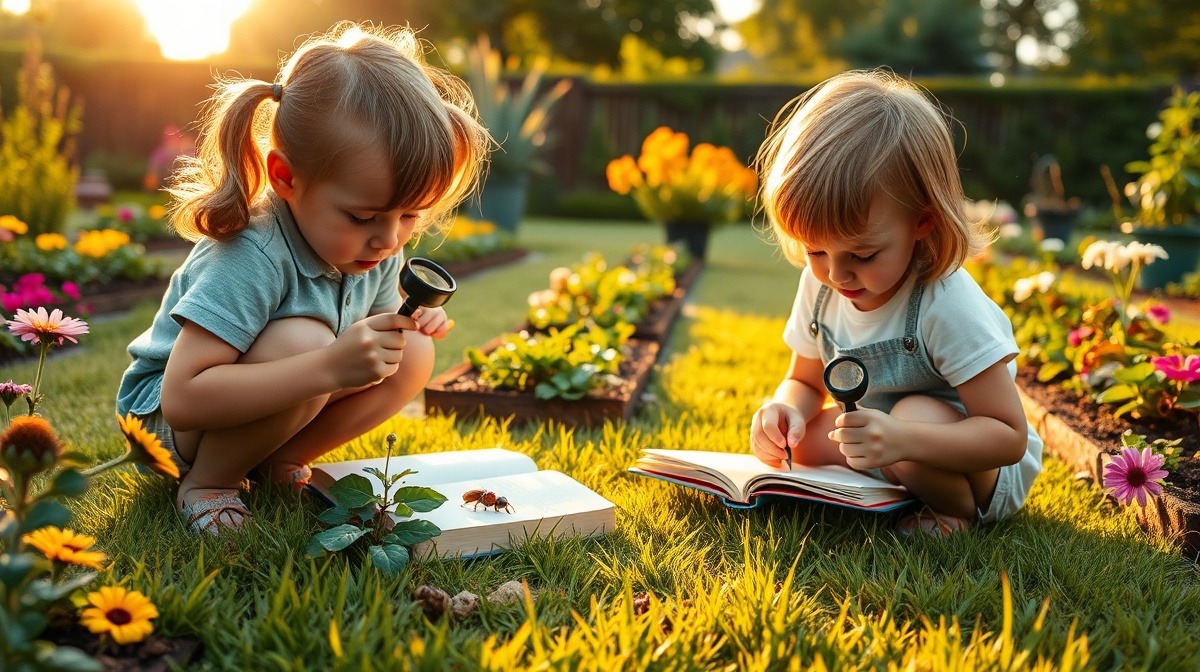
This requires minimal prep but teaches real scientific thinking. Every day for three weeks, we spent 15 minutes observing and sketching what was happening in our yard.
Sounds simple? It was revolutionary. My kids learned to notice seasonal changes, identify species, understand food webs, and practice the scientific method—all from our back porch.
The nature journals they kept became treasured keepsakes and genuine scientific documents of our local ecosystem.
History & Culture
4. Ancient Civilizations
Pick one—Egypt, Greece, Rome, or Mesopotamia—and go deep rather than surface-level. We’ve done all four over the years, and each was rich enough for a month of learning.
Ancient Egypt covered history, archaeology, art, mathematics (pyramid geometry), and architecture. We built model pyramids, designed Egyptian jewelry, learned hieroglyphics, and studied mummification (the science fascinated my kids more than grossed them out).
For reading, we combined textbooks with historical fiction like The Egypt Game and primary sources. Having my kids debate historical decisions as if they were ancient Egyptians brought the time period alive.
5. American Civil War Through Multiple Lenses
This unit works brilliantly for experienced homeschoolers because it’s complex enough for deep learning but endlessly engaging.
We studied the war through history, literature, economics, geography, and ethics. Reading actual letters from soldiers, studying battle maps, and taking virtual museum tours made it real.
The writing project that sealed the learning? Each child wrote diary entries from the perspective of different historical figures—a plantation owner, an enslaved person, a Union soldier, a Southern belle. The research required for authentic voices taught more than any textbook ever could.
6. Immigration & Cultural Heritage
This unit gets deeply personal, building identity and empathy simultaneously. Kids research their own family’s immigration story while learning about broader patterns of human migration.
We interviewed family members, researched ancestry, cooked traditional recipes, and learned about push-and-pull factors in immigration. My kids created a family documentary that became a treasured family heirloom.
The beauty of this unit is that every family has a unique story to tell, making it automatically engaging and relevant.
Science & Technology
7. Space Exploration & Astronomy
The wonder factor is built in here—kids naturally want to learn about space. We covered physics, astronomy, history of science, and research skills.
Building a scale model solar system in our backyard (using different sized balls and measuring actual distances) taught mathematical concepts better than any worksheet. We tracked constellations, studied current NASA missions, and learned about astronaut training.
My son became so interested that he started following the International Space Station’s social media accounts and tracking its orbit. That’s the kind of self-directed learning that makes homeschooling magical.
8. Human Body Systems
Perfect for middle schoolers who are becoming aware of their changing bodies. Instead of memorizing parts, we studied how systems interact and affect each other.
We built 3D models of organs, traced blood flow through the circulatory system, and researched how diseases affect multiple body systems. My daughter chose to study diabetes and ended up understanding nutrition and metabolism better than most adults.
Go deep, not surface-level. It’s better to truly understand three body systems than to memorize the names of bones you’ll forget next month.
9. Renewable Energy & Sustainability
This connects to real-world problems kids see in the news. We covered physics, engineering, environmental science, and economics while building solar ovens and wind turbine models.
The practical project that drove everything? Creating a sustainability plan for our home. My kids calculated our carbon footprint, researched energy alternatives, and presented their findings like environmental consultants.
They still remind me to unplug devices and choose energy-efficient options. When learning connects to daily life, it sticks.
Arts & Creativity
10. Renaissance Masters & Art History
This beautifully combines history, art, culture, and biography. We studied famous artists, learned their techniques, and understood the social context that shaped their work.
My kids recreated famous paintings (scaled down, obviously), learned perspective drawing, and studied the patronage system that funded Renaissance art. Virtual museum tours brought us face-to-face with masterpieces we’d only seen in books.
The cultural learning was as valuable as the artistic skills. Understanding how art reflects society’s values gave my children a lens for analyzing all kinds of media.
11. Music Through the Ages
This bridges left-brain and right-brain learning beautifully. We studied music history, cultural contexts, mathematics (rhythm and scales), and social influences.
Even though we’re not a particularly musical family, this unit worked because we focused on listening and analysis rather than performance. We learned to identify different musical periods, studied famous composers’ lives, and analyzed how music reflected social changes.
My daughter started composing simple melodies on a keyboard app, and my son became fascinated with how mathematical ratios create harmony.
12. Mythology & Storytelling
Reading myths from multiple cultures while exploring universal human themes—this unit teaches narrative structure, cultural studies, and creative writing simultaneously.
We read creation stories from around the world, compared flood myths across cultures, and studied how mythology influenced art and literature. The kids illustrated their favorite myths and wrote modern retellings.
The project that brought it together? Creating an illustrated mythology guidebook that compared themes across cultures. My kids still reference those universal patterns when reading new stories.
Literature & Language Arts
13. Author Study
Pick an author your child already loves, and engagement multiplies automatically. We’ve done author studies on Roald Dahl, Gary Paulsen, and Rick Riordan, each revealing different aspects of writing craft.
We read multiple works, researched the author’s life, studied their writing style, and explored historical contexts. My kids learned to recognize an author’s voice and techniques across different books.
The creative projects varied—writing in the author’s style, creating fan art, designing alternate book covers. But the deep reading and analysis skills they developed transferred to all their future literature studies.
14. Poetry in Depth
Don’t skip this because you think kids won’t like poetry. The right approach makes poetry accessible and powerful.
We read diverse poets, memorized favorite poems (which improved their public speaking), and wrote original poetry. I was amazed at how studying poetry improved their prose writing—they became more conscious of word choice and rhythm.
The performance element was crucial. Reading poems aloud and eventually performing spoken word pieces built confidence and showed them that poetry is meant to be heard, not just read silently.
15. Fairy Tales & Folklore Across Cultures
Universal appeal meets serious literary analysis. We read the same basic stories from different cultures—Cinderella stories appear in dozens of cultures with fascinating variations.
Comparing versions taught analysis skills, cultural awareness, and the power of storytelling traditions. Writing their own fairy tales showed them how stories work from the inside.
This unit works for all ages because you can adjust the complexity of analysis while keeping the magical elements that hook younger learners.
Practical & Real-World Learning
16. Entrepreneurship & Business
Real-world learning that teaches life skills while covering academic content. My kids started small businesses—a neighborhood pet-sitting service, handmade crafts, even a lawn care business.
They learned pricing, customer service, profit and loss, marketing, and problem-solving. The math became meaningful because it directly affected their earnings. The writing mattered because they needed to communicate with customers.
This unit teaches skills they’ll use for life, whether or not they ever start another business.
17. Cooking & Food Science
This is underrated as a learning tool, but engagement is guaranteed. We explored different cultures through their cuisine while studying food chemistry, nutrition, and mathematics.
Measuring ingredients taught fractions and conversions. Understanding why bread rises taught chemistry. Researching traditional recipes taught cultural history.
The cookbook they created, complete with scientific explanations of cooking processes, became a family treasure and showed them how science appears in everyday life.
18. Architecture & Building Design
Mathematics, geometry, physics, history, and art all come together when studying how humans create structures. We analyzed famous buildings, learned about different architectural styles, and studied how form follows function.
The hands-on projects varied by age—younger kids built with blocks and Legos, older ones designed dream houses with accurate measurements and engineering principles.
19. World Geography Through Food
Instead of memorizing capitals, we “traveled” the world through cuisine. Each week, we focused on a different country or region, cooking traditional foods while learning about climate, culture, economics, and history.
This sensory approach to geography created lasting memories. My kids still associate certain flavors with specific countries and can explain how geography influences what people eat.
20. Local History & Community Studies
The most overlooked unit study opportunity is often right outside your door. Every community has unique history, geography, and culture worth exploring.
We interviewed long-time residents, visited local historical sites, researched how our town changed over time, and studied local government. My kids developed genuine pride in their community and understood how history connects to their daily lives.
Making Unit Studies Work for Your Family
Here’s what I’ve learned after six years of unit studies: perfectionism is the enemy of good learning. Your unit doesn’t need to be Pinterest-worthy or cover every possible angle.
Start with one unit that connects to your child’s existing interests. Keep it simple—two weeks, three main subjects, one final project. See how it goes.
The goal isn’t to revolutionize your homeschool overnight. It’s to create connected learning experiences that help your kids see how knowledge works together in the real world.
Some of our best units happened when I followed my children’s questions rather than sticking rigidly to my plans. When curiosity leads, learning follows.
Your homeschool doesn’t need to look like anyone else’s. These 20 ideas are starting points, not prescriptions. Take what works, adapt what doesn’t, and create the learning experiences that light up your kids’ minds.
Because at the end of the day, that’s what we’re really after—kids who love learning and see connections everywhere they look.