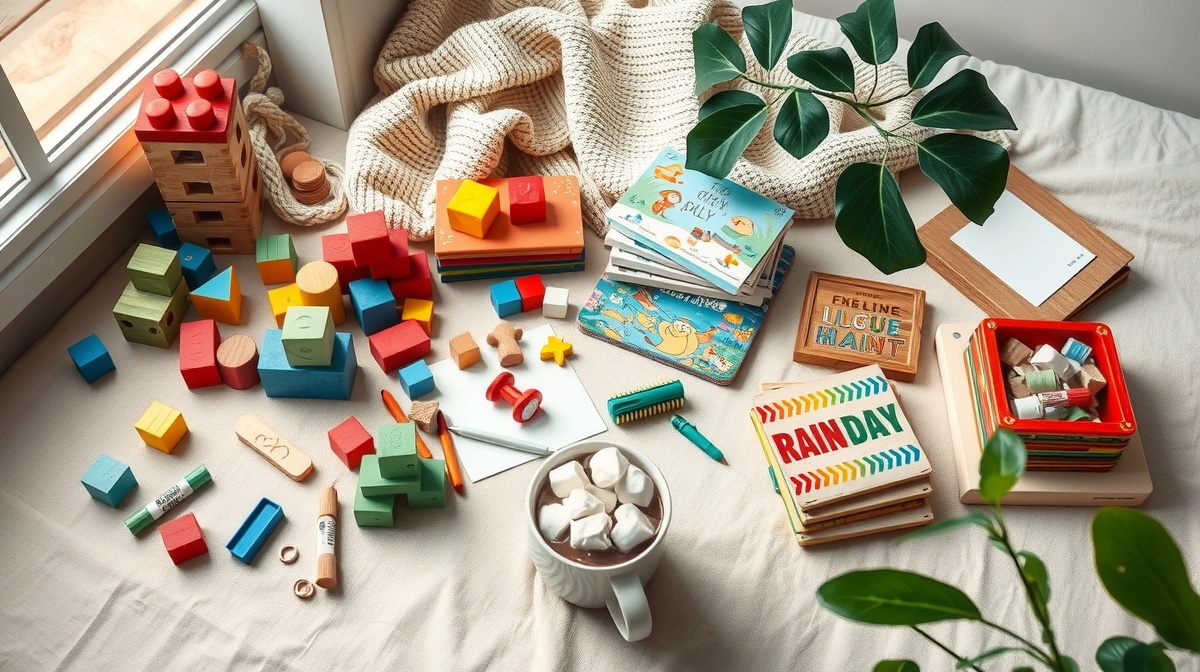
The Rainy Day Dilemma (And Why You're Not Failing)
Last Tuesday, my weather app showed rain for the entire week. My stomach dropped. I could already hear the dreaded "I'm bored" chorus from my kids, see the chaos of cabin fever setting in, and feel that familiar guilt about defaulting to screen time just to maintain my sanity.
If you're reading this while glancing nervously at dark clouds outside, you're not alone. The struggle is real, and it's not because you're failing as a parent. The problem is that most of us wing it when bad weather hits, scrambling for activities that either fizzle out in five minutes or create more mess than they're worth.
Here's the truth: The difference between a chaotic rainy day and a genuinely enjoyable one isn't luck—it's having the right activities in your back pocket.
I've spent the last two years collecting and testing indoor activities that actually work for kids ages 4-10. Not the Pinterest-perfect crafts that require a trip to three different stores, but real, practical activities that use stuff you already have at home. Some are creative, some get their energy out, and others give you blessed quiet time.
The best part? Most of these require minimal prep but deliver maximum engagement. Because honestly, who has time to set up elaborate activities when you're already dealing with stir-crazy kids?
What Can Kids Do Indoors When It's Raining? (The Real Answer)
Let me be straight with you—generic advice like "just play with toys" fails because it doesn't account for the energy shift that happens when kids are stuck inside. Their usual outdoor outlets are gone, their routine is disrupted, and they need activities that match their mood and energy level.
I've found that the most successful indoor activities for kids fall into four categories: creative (for when they want to make something), physical (to burn off energy), educational (that sneaky learning disguised as fun), and quiet (for when everyone needs to decompress).
Not every activity will work for every kid or every day—and that's okay. My 8-year-old loves building elaborate LEGO creations while my 5-year-old would rather dance around the living room. The goal isn't to find one magic activity but to have options that match different moods and energy levels.
The activities I'm sharing have all passed the real-world test: they keep kids engaged for more than ten minutes, use materials you probably already have, and don't leave you feeling like you need a cleanup crew afterward.
The Creative Activities (That Actually Keep Them Busy for Hours)
DIY Slime Station
I was skeptical until I realized my 6-year-old spent 90 minutes making slime without asking for screen time once. There's something almost meditative about the mixing and stretching that keeps kids completely absorbed.
Here's my tried-and-true borax-free recipe: Mix 4 oz of white glue with 1 tablespoon of shaving cream, add food coloring, then slowly mix in 1 tablespoon of contact lens solution while stirring. The key is adding the solution gradually—too much at once and you'll get a rubbery mess.
Set up a dedicated slime station using a plastic tablecloth or large tray. Trust me, have wet wipes ready before you start, not after. For younger kids (4-6), stick to basic slime. Older kids (7-10) love experimenting with variations like glitter slime, fluffy slime, or clear slime.
The cleanup isn't as bad as you'd think, and watching their faces light up when the mixture transforms into slime makes it worth any mess.
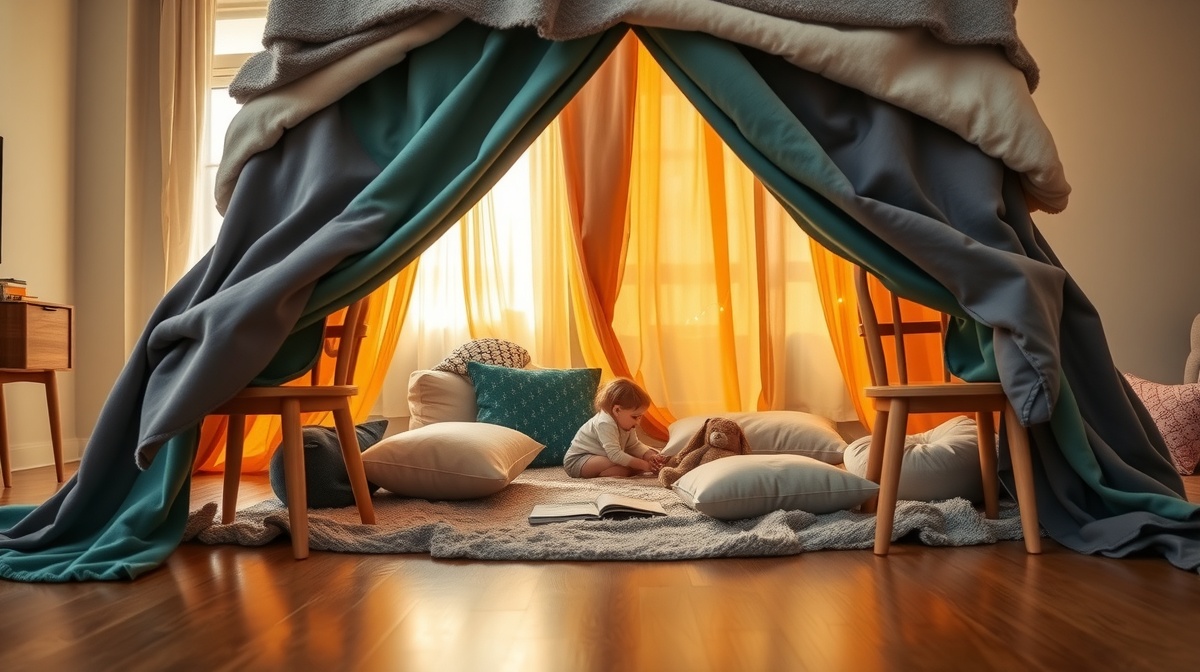
Indoor Blanket Fort Building
This activity is seriously underrated. There's something about creating their own space that gives kids a sense of accomplishment and ownership. Plus, once built, the fort becomes a base for other activities—reading, snacking, or storytelling.
Start with basic materials: chairs, blankets, pillows, maybe some clothespins to secure everything. Here's a game-changer: have kids sketch their fort design first. It doesn't have to be architectural—just a simple drawing that helps them think through their plan.
For ages 4-6, keep it simple with a basic tent structure. Kids 7-10 can handle more complex designs with multiple rooms or tunnels. Add string lights or glow sticks for ambiance, and suddenly you've created the coolest hangout spot in the house.
The best part? Building the fort is just the beginning. It becomes their special retreat for the rest of the rainy day.
Painting or Drawing Challenge
Move beyond "just coloring"—kids respond better when you give them a creative challenge or theme. Instead of handing them blank paper, try prompts like "Paint your favorite memory," "Draw what you imagine dinosaurs doing on a rainy day," or "Create a comic strip about a superhero who controls the weather."
I've found that kids often surprise you with their creativity when you give them a theme rather than a blank page. The structure actually frees them up to be more imaginative because they're not overwhelmed by endless possibilities.
Use whatever art supplies you have—watercolors, acrylics, colored pencils, even crayons work fine. Set up a proper art station with good lighting, water cups, and paper towels. For ages 4-6, focus on fun and exploration. Ages 7-10 can handle more detailed projects and might enjoy learning basic techniques like color mixing or shading.
DIY Craft Kit Adventures
This is a staple in my house because I spend about $10 on supplies that entertain for weeks. Keep a shoebox stocked with pipe cleaners, pom-poms, googly eyes, construction paper, glue sticks, and scissors (age-appropriate ones for younger kids).
Project ideas include animal puppets, flower bouquets, abstract sculptures, or friendship bracelets. Younger kids (4-6) enjoy free-form creation where they just glue and arrange without a specific goal. Older kids (7-10) like following project guides or creating gifts for family members.
Here's a bonus: these crafts double as gifts for grandparents, which adds purpose to the activity. My kids get more excited about their creations when they know they're making something special for someone else.
How Do I Entertain Kids Stuck Inside? (Beyond Screen Time)
The secret isn't finding one perfect activity—it's using what I call the "rotation method." Instead of expecting one activity to last all day, rotate between 2-3 different types every 45-60 minutes. This prevents boredom fatigue and gives kids something to look forward to.
Here's a framework that actually works:
Morning: Start with physical activity (indoor dance party, obstacle course) to burn initial energy
Mid-morning: Transition to creative time (crafts, painting) when they're focused but not hyper
Post-lunch: Quiet activities (puzzles, reading) during the natural afternoon lull
Afternoon: Educational or building activities (science experiments, LEGO projects)
Late afternoon: Free play or limited screen time
The goal isn't to eliminate boredom entirely—it's to give kids the tools to work through it. Some of my best parenting moments have happened when I resisted the urge to immediately fix their boredom and instead helped them discover something engaging on their own.
Mix active and calm activities throughout the day. If you just had a high-energy dance session, follow it with something that requires focus and concentration. This rhythm helps manage their energy levels and your sanity.
The Physical Activities (Burn Energy Without Going Outside)
Indoor Obstacle Course
On day three of our last rain streak, my kids were literally bouncing off walls until I set up an obstacle course in our living room. Complete game changer.
You don't need fancy equipment—use pillows to jump over, tape lines on the floor for balance beams, chairs to crawl under, and couch cushions for climbing hills. For ages 4-6, keep courses simple with single challenges. Kids 7-10 love multi-step courses with timed elements or competitions.
Here's what makes this activity brilliant: let kids design their own course after you show them the basics. They'll spend just as much time planning and redesigning as they will running through it. Just clear any breakables first and make sure you have adequate space.
Safety tip: Establish rules upfront about what furniture can and can't be used, and always supervise younger kids.
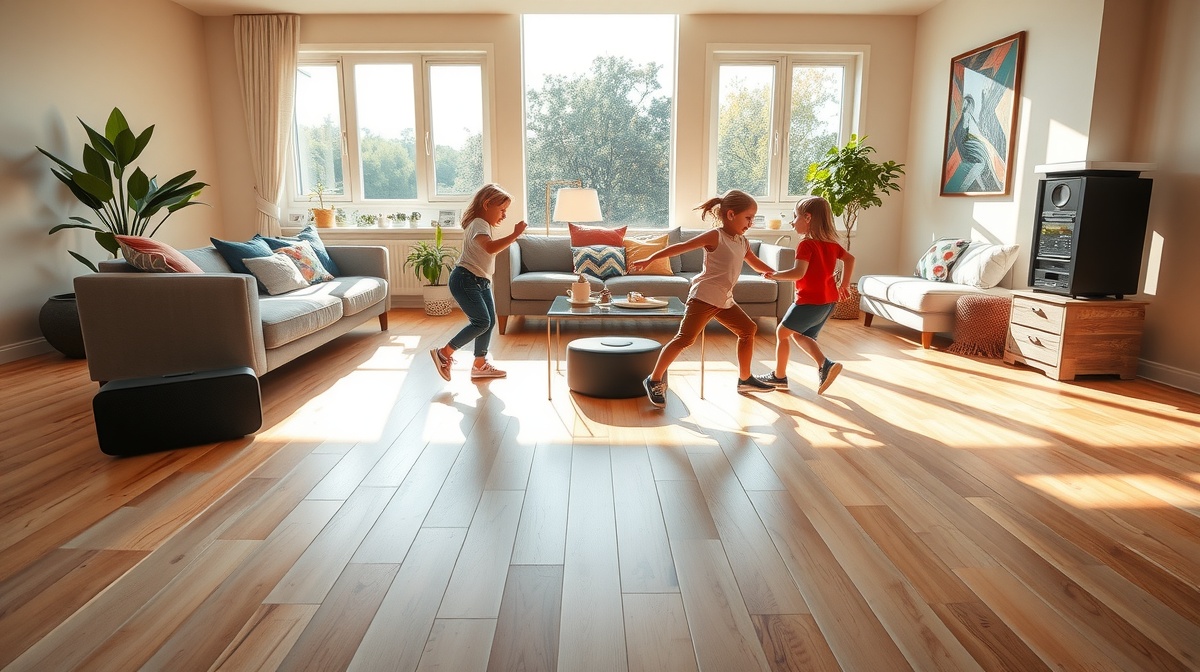
Living Room Dance Party
Sometimes the simplest solutions are the best ones. Clear some space, put on age-appropriate music, and let them go wild. My kids are genuinely tired and happy after 20 minutes of dancing, with zero guilt about screen time.
Upgrade the experience with freeze dance, dance-off competitions, or "follow the leader" dancing where they take turns creating moves for everyone to copy. Make it a family activity if you want extra bonding time—kids love when parents join in and look ridiculous too.
The beauty of this activity is that it works for all ages 4-10, requires no setup, and you can adjust the intensity based on your space and noise tolerance.
Yoga or Stretching Session for Kids
This one's underrated because it combines movement with mindfulness. YouTube has fantastic kid-specific yoga channels like Cosmic Kids Yoga that make it engaging rather than boring.
For ages 4-6, stick to 10-15 minute sessions with simple poses and lots of animal movements (downward dog, cat-cow, butterfly). Kids 7-10 can handle 20-30 minute sessions with more challenging poses and breathing exercises.
I use this as a transition activity between more chaotic games and quiet time. It helps them reset their energy and emotions, plus it's building body awareness and flexibility without them realizing it.
Indoor Scavenger Hunt
This combines physical movement with mental engagement, which is perfect for burning energy while keeping minds busy. Create lists based on your kids' ages and abilities.
For younger kids (4-6): "Find something blue," "Find something soft," "Find your favorite stuffed animal"
For older kids (7-10): "Find something that starts with 'M'," "Find something you haven't used in a month," or riddle-based clues like "Find where food stays cold"
Try variations like timed hunts, team hunts if you have multiple kids, or themed hunts (everything related to animals, colors, or shapes). The key is keeping them moving while engaging their problem-solving skills.
The Quiet Activities (For When You Need Some Peace)
Puzzle Challenge
Puzzles are seriously underrated for developing focus and concentration. They're one of the few activities where my kids will sit quietly for 30+ minutes, completely absorbed in the challenge.
Age recommendations that actually work:
- Ages 4-6: 24-48 piece puzzles with familiar characters or scenes
- Ages 7-10: 100-300 piece puzzles, or try 3D puzzles for an extra challenge
Rotate puzzles every few months to keep them fresh, and consider having a dedicated puzzle space where partly completed ones can stay undisturbed. Floor puzzles work great for younger kids who like to spread out.
Reading Marathon (With Incentives)
Make reading feel special, not like a chore. Create a cozy reading nook with pillows, blankets, and good lighting. Sometimes changing the location makes all the difference—under the dining table, in that blanket fort they built, or even in your closet with a flashlight.
Try "reading bingo" where kids check off different types of books they finish, or set up a family reading time where everyone reads their own book in the same room. The key is letting kids choose books they're actually interested in, even if it's not what you'd pick.
Ages 4-6 do great with picture books and early readers, while ages 7-10 can tackle chapter books, graphic novels, or comics. And yes, audiobooks totally count—especially for reluctant readers or kids who learn better through listening.
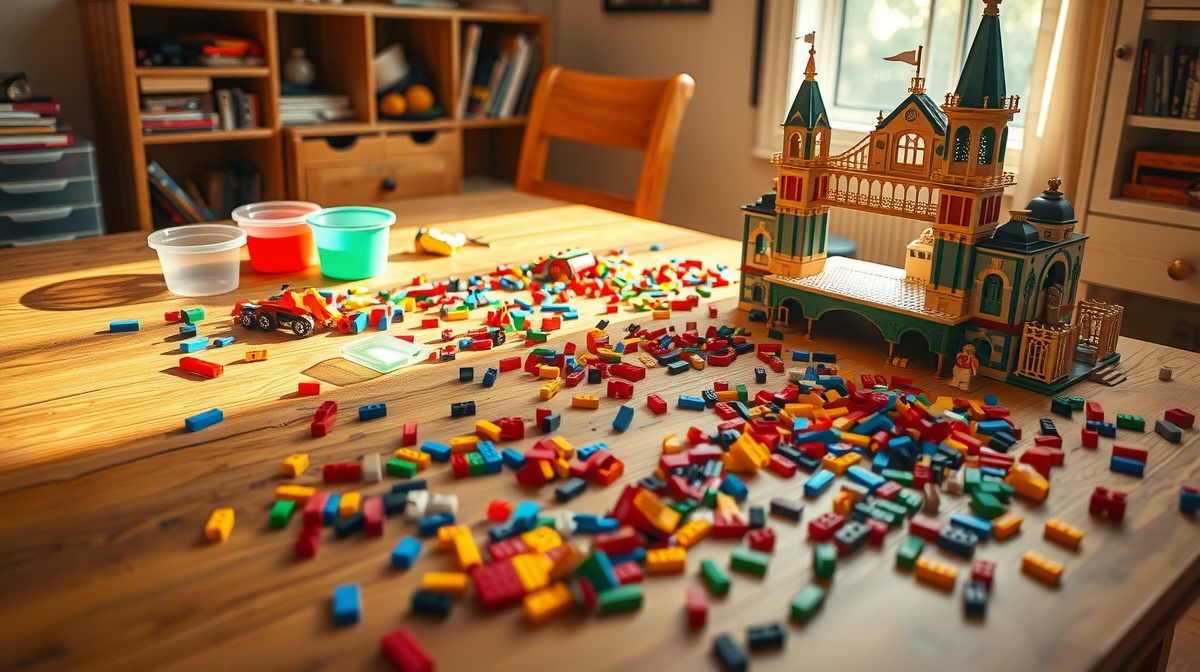
LEGO or Building Block Creation
This is the ultimate open-ended activity that combines creativity with problem-solving. Forget the instruction manuals for a while and challenge kids to build something from their imagination.
For younger kids (4-6), try prompts like "build a house for your favorite animal" or "create the tallest tower you can." Older kids (7-10) can handle more complex challenges like "build a vehicle that could travel to Mars" or "design a playground for tiny people."
The best part? These creations can stay up for days, becoming part of their play world long after the initial building session.
Science Experiments (Kitchen Chemistry)
Turn your kitchen into a lab with simple experiments using household items. The classic baking soda and vinegar volcano never gets old, but try expanding into other reactions.
Easy experiments that work:
- Make invisible ink with lemon juice
- Create density towers with different liquids
- Grow crystals with salt or sugar solutions
- Make slime (different recipe from the craft version)
For ages 4-6, focus on the "wow" factor and simple cause-and-effect. Kids 7-10 can understand basic scientific principles and even predict outcomes. Always supervise and establish safety rules first.
Board Games and Card Games
Don't underestimate the power of analog games. They teach strategy, patience, and social skills while keeping kids engaged for extended periods.
Age-appropriate suggestions:
- Ages 4-6: Candy Land, Chutes and Ladders, Go Fish, Memory games
- Ages 7-10: Monopoly Junior, Uno, Connect Four, simple strategy games
Choose games that match attention spans and skill levels. Nothing kills the mood faster than a game that's too complex or takes too long for your kids' developmental stage.
Bonus Activities for Particularly Long Rainy Days
Indoor Camping Adventure
Set up tents (or blanket forts) in different rooms and create a whole camping experience. Pack "trail mix" (whatever snacks you have), tell stories with flashlights, and even do indoor s'mores using your stove or microwave.
This works especially well for ages 6-10 who can really get into the imaginative aspect. Let them pack their own camping gear and plan activities for their indoor adventure.
Cooking or Baking Projects
Get kids involved in preparing their own snacks or simple meals. Ages 4-6 can wash vegetables, stir ingredients, and decorate cookies. Kids 7-10 can follow simple recipes with supervision and learn basic cooking skills.
This serves double duty—it's an engaging activity and takes care of snack time. Plus, they're more likely to eat something they helped create.
Making Rainy Days Work for Your Family
The reality is that not every activity will be a hit every time. Some days my kids love crafts, other days they want to move their bodies, and sometimes they just need quiet time to decompress. Pay attention to their energy levels and moods rather than forcing activities that aren't matching the moment.
Keep a simple rotation of supplies accessible: art materials in one bin, physical activity props in another, quiet activities in a third. When kids know where to find things, they can become more independent in choosing and setting up activities.
Remember that some boredom is actually healthy—it forces kids to use their creativity and problem-solving skills to entertain themselves. Your job isn't to be a constant entertainment director, but to provide options and guidance when they need it.
The best rainy days happen when you can mix structured activities with free play, high energy with quiet time, and group activities with independent exploration. It's not about perfection—it's about having tools in your toolkit that actually work when you need them.
Next time you see rain in the forecast, take a deep breath. You've got this. And honestly? Some of our family's best memories have happened on those unexpected indoor days when we slowed down and got creative together.